
High-Purity Air Supply Assurance by Dry Screw Oil-Free Air Compressors in Electronics Manufacturing
Electronics manufacturing, particularly semiconductor, LCD panel, and precision component production, imposes extremely high demands on the cleanliness, dryness, and stability of compressed air. Any trace of oil molecules or particulate contamination can lead to decreased product yield or even the scrapping of entire batches. Under these circumstances, dry screw oil-free air compressors have become the core equipment of choice for high-purity air supply systems.
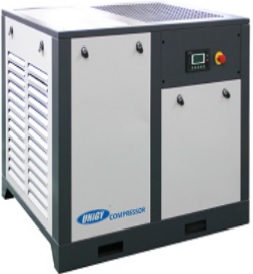
The core of a dry screw oil-free air compressor lies in its structural design, which completely isolates the compression chamber from the lubrication system. During the compression process, the male and female rotors are driven by high-precision timing gears, operating without physical contact. The compression medium never comes into contact with lubricating oil throughout the entire process, ensuring that the output air is truly oil-free. This characteristic makes it naturally suited to meet the electronics industry's demand for Class 0 oil-free air quality.
In practical applications, electronic manufacturing facilities typically feature complete air purification systems, including refrigerated dryers, desiccant dryers, and multi-stage precision filters. As the primary air source, the dry screw oil-free air compressor, despite its exhaust moisture content being influenced by ambient conditions, significantly reduces the burden on downstream drying and filtration systems due to its oil-free nature. This results in improved overall purification efficiency.
It is worth noting that when operating a dry screw oil-free air compressor in high-temperature environments, special attention must be paid to controlling the host temperature rise. Since there is no cooling effect from lubricating oil, the heat generated during compression is primarily dissipated through the housing and the external cooling system. Therefore, selecting a properly sized cooler capacity and ensuring adequate ventilation conditions are prerequisites for maintaining efficient equipment operation.
From a system integration perspective, modern dry screw oil-free air compressors generally support industrial communication protocols such as Modbus and Profibus. This facilitates connection to central monitoring platforms, enabling centralized control of multiple units, load balancing, and energy consumption analysis. This intelligent management approach aligns with the requirements of electronics factories for lean production and refined energy management.
Regarding maintenance strategies, although dry screw oil-free air compressors eliminate the need for oil changes, regular inspection of transmission components such as timing gears and bearings cannot be overlooked. It is recommended to establish a preventive maintenance plan based on operating hours and utilize vibration monitoring techniques to identify potential failures in advance.