
Core Components of a Nitrogen Compressor System and Their Functional Roles
A nitrogen compressor is a precision-engineered system composed of interdependent mechanical and control components, each playing a critical role in safely and efficiently elevating nitrogen gas to required pressures. Understanding these elements is vital for maintenance planning, troubleshooting, and system integration in industrial facilities.
At the heart of most nitrogen compressors is the compression chamber, which typically consists of a cylinder and piston assembly in reciprocating designs. The cylinder—machined from materials ranging from cast iron to stainless steel depending on application—houses the piston, which moves linearly to reduce gas volume and increase pressure. Piston rings, often made from PTFE, carbon, or PEEK, provide dynamic sealing against the cylinder wall while minimizing friction and wear. Clearance volume between the piston and cylinder head is carefully calculated to optimize volumetric efficiency, especially in multi-stage units where intercoolers manage thermal load between stages.
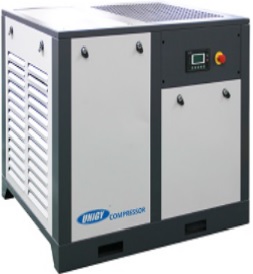
Valve assemblies are another critical subsystem. Suction and discharge valves—usually plate-type or ring-type reed valves—open and close in response to pressure differentials, controlling gas flow direction. These valves must operate with minimal lag to prevent efficiency loss and are often constructed from stainless steel or nitrided alloys to resist fatigue from millions of cycles. According to API 618, valve dynamics significantly impact compressor reliability, with improper timing leading to increased power consumption or valve failure.
The crankshaft and connecting rod translate rotary motion from the drive motor into reciprocating motion. In larger units, crankshafts are forged from alloy steel and balanced to ISO 1940 standards to minimize vibration. Bearings—whether plain or rolling-element—are selected based on load capacity and lubrication method. Oil-lubricated systems use pressurized lubrication circuits with filters and coolers, while oil-free compressors rely on advanced bearing materials like sintered bronze or ceramic composites.
Gas cooling is essential due to the thermodynamic heating of nitrogen during compression. Intercoolers (between stages) and aftercoolers (post-final stage) are typically shell-and-tube or plate heat exchangers designed to reduce discharge temperatures to safe levels—usually below 150°C—to protect downstream components and maintain gas density. Cooling media may be ambient air, water, or glycol mixtures, depending on facility infrastructure.
Control and monitoring systems have become increasingly sophisticated. Modern nitrogen compressors integrate PLCs or dedicated controllers that regulate start/stop sequences, monitor pressure and temperature sensors, and trigger alarms for abnormal conditions such as high discharge temperature or low oil pressure. Safety relief valves, compliant with ASME Section VIII, provide overpressure protection, while check valves prevent backflow during shutdown.
Auxiliary components include inlet filters to remove particulates from feed nitrogen (even if sourced from a membrane or PSA generator), moisture separators to capture condensate, and pulsation dampeners to smooth pressure fluctuations that could damage piping or instruments. In high-purity applications, all internal surfaces undergo passivation and are tested per ISO 8573-1 Class 1 or better for particle and moisture content.
Drive systems vary by power requirement. Smaller compressors may use single-phase electric motors, while industrial units often employ three-phase induction motors rated for continuous duty. Variable frequency drives (VFDs) are increasingly common, allowing precise matching of output to demand and improving energy efficiency by up to 30%, as noted by the Compressed Air Challenge.
Together, these components form a cohesive system engineered for reliability, efficiency, and compatibility with nitrogen’s unique properties—non-flammability, chemical inertness, and sensitivity to contamination. Proper selection, integration, and maintenance of each part ensure sustained performance in demanding industrial environments.