
The Evolution and Historical Timeline of the Screw Vacuum Pump
The screw vacuum pump, now a cornerstone of modern dry vacuum technology, has a development history spanning more than six decades. While its current form is highly refined, the foundational principles trace back to mid-20th century engineering innovations. Understanding the historical progression of the screw vacuum pump provides context for its widespread adoption and continuous technological refinement.
The earliest conceptual groundwork for screw-type compressors dates back to the 1930s, with Swedish engineer Alf Lysholm pioneering the design of twin-screw compressors for air and gas applications. However, it wasn’t until the 1950s and 1960s that engineers began adapting this principle for vacuum generation. Initial attempts faced challenges related to tight tolerances, thermal expansion, and material limitations, which hindered commercial viability.
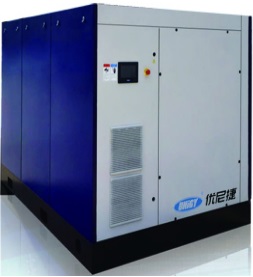
Significant progress occurred in the 1970s when advances in precision machining—particularly CNC technology—enabled the production of rotors with micron-level accuracy. According to archival records from the American Vacuum Society, the first functional dry screw vacuum pump prototype was demonstrated in Germany in 1974 by a team at a leading industrial machinery firm. This early model achieved a base pressure of 1 mbar but suffered from high noise levels and limited service life.
The 1980s marked a turning point. With growing environmental regulations—such as the U.S. Clean Air Act Amendments of 1990 looming—industries sought alternatives to oil-lubricated pumps that released hydrocarbons. Japanese and European manufacturers invested heavily in R&D, leading to improved rotor profiles and better sealing techniques. By 1987, commercially available screw vacuum pumps could reach ultimate pressures below 0.1 mbar, as documented in a review published by Vacuum journal.
The 1990s saw rapid adoption in the electronics industry, especially as semiconductor feature sizes shrank below 1 micron. Contamination from oil vapors became unacceptable, accelerating the shift toward dry pumping solutions. Industry data from VDMA (German Engineering Federation) shows that sales of dry screw vacuum pumps in Europe grew at an average annual rate of 11% between 1992 and 2000.
The 2000s brought material science breakthroughs. Coatings such as PTFE, nickel-phosphorus, and specialized ceramics enhanced corrosion resistance, enabling use in chemical and pharmaceutical applications. A 2008 technical bulletin from the International Organization for Standardization (ISO) noted that these advancements extended mean time between failures (MTBF) from 8,000 to over 25,000 hours.
In the 2010s, digital integration transformed operational capabilities. Sensors, remote diagnostics, and energy-efficient motors became standard. A 2016 study by the Fraunhofer Institute found that modern screw vacuum pumps consumed up to 30% less energy than their 2005 counterparts under equivalent loads.
As of 2025, the screw vacuum pump has been in active industrial use for approximately 50 years, with its core concept evolving through multiple generations of engineering innovation. From a niche alternative to a mainstream solution, its journey reflects broader trends in industrial automation, environmental responsibility, and precision manufacturing. Ongoing research into additive manufacturing of rotors and AI-driven predictive maintenance suggests the next chapter in its history is already unfolding.